Blog #33 How the Twilight Franchise evolved with “Eclipse” (2010)
When Twilight - Eclipse released, it drew the usual reaction these films tend to do—men swearing they hated them and women pretending they weren’t enthralled by them. But…these films drew a huge silent audience, who watched with baited breath as the series evolved. With each film, there is a natural progression in scale and technical capacity; the franchise takes a step up each film. I’m going to be looking at the filmmaking techniques they used and why this franchise should serve as a template for success in the young-adult genre in the future.
Here are 6 points on Twilight - Eclipse (2010).
One of the things I noticed, while watching the film, is that they use wide nature shots throughout the film. These shots are extreme-wides and often above the trees. It made the film feel more epic and were useful as a transitionn between scenes and as a way to slow the film down between tense scenes, creating a release from the pressure. The shots felt like they had high production value—they were beautifully framed, exposed and the sound design was appropriate alongside.
Shallow depth of field—this film had a much shallower depth of field than the previous films. I thought it went a little too hard on the shallowness. At that time in cinema (2010), shallow depth of field was all the rage, but moving forward, people have moved away from that look because there is only so much information you can fit in a shallow focus. I thought it worked well in the first film, because they used it sparingly, but if you use it too much it can take away from the film. In this film, they used it too much and it looks a little dated because of it, even though it looks more modern than the previous two installments in a lot of other ways.
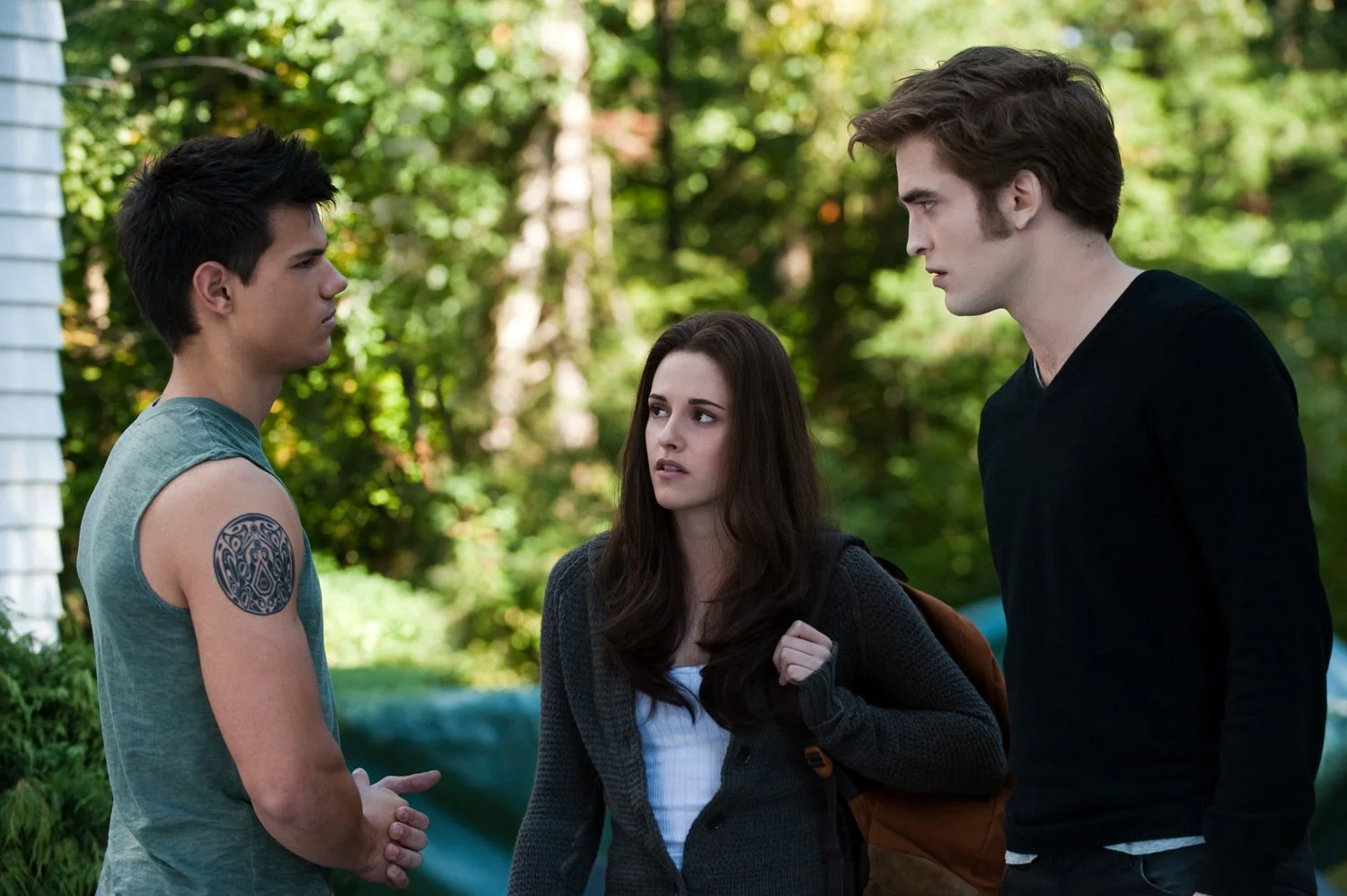
A little too shallow for me
3. History - this is the first time in the franchise where they go deep into the history of the vampires vs. werewolves history. By doing this, the film creates a foundation to immerse the viewer and to build from. They build from the history forwards—laying the ground for the upcoming war between the different groups in the films. It works well, giving meaning to the scenes and providing another angle to look at the characters from. The history isn’t just exposition; it directly influences how characters trust or fear each other. This also connects to the next point:
4. Build up - the film does a good job of creating tension and making it feel like the franchise is going somewhere. All the subplots feel like they are leading up to something epic. There is constantly something happening in the background and there are forewarnings everywhere. The film moves on from the simple Bella and Edward narrative to a bigger question—what place do vampires have in this world?
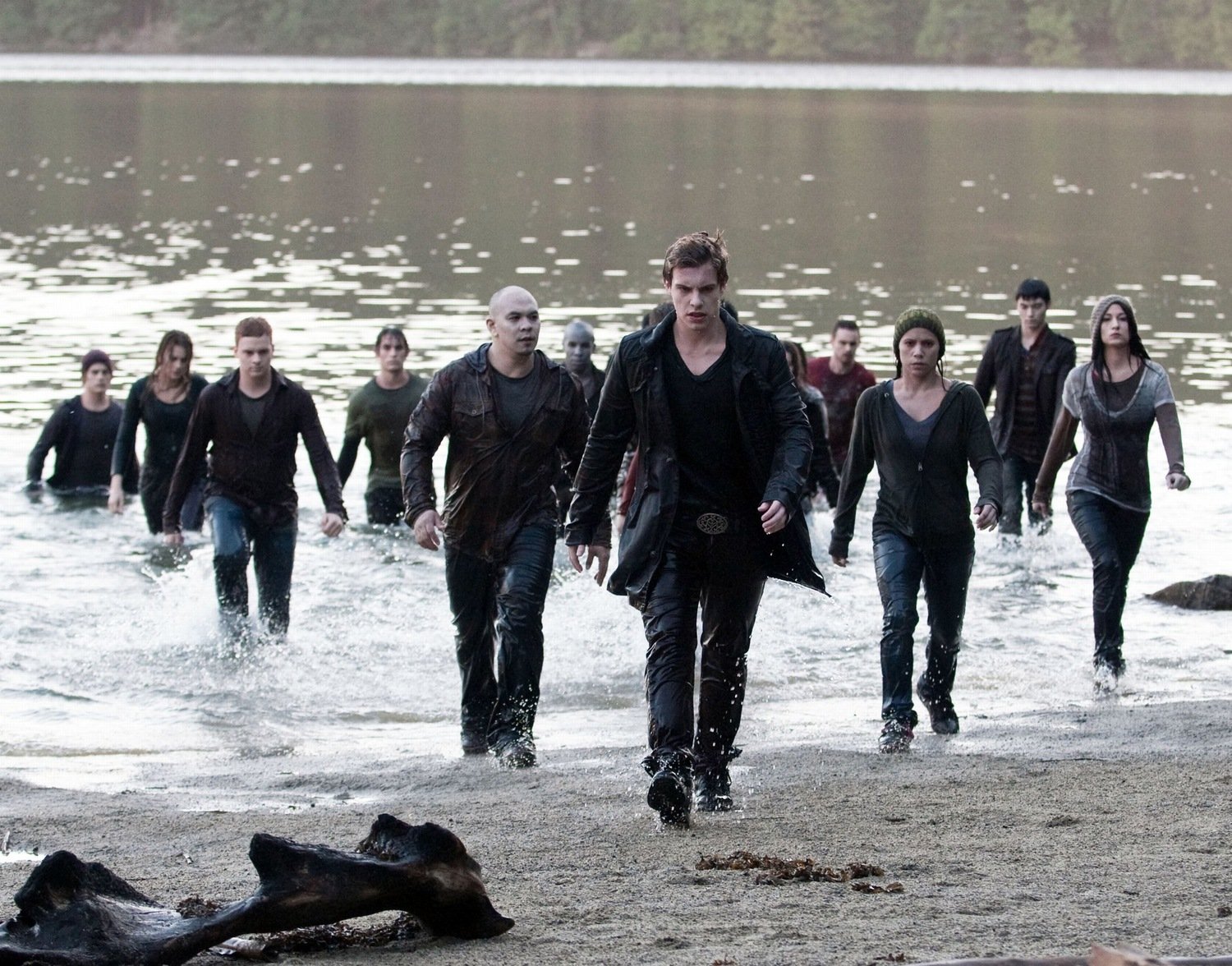
Build up of tension
5. Love triangles - the series continues with its theme of love triangles but adds more layers. Of course, there is still the Bella-Edward-Jacob thing going on, but there are also new female characters added to the mix, who are jealous of Bella. The film makes her the chosen one. Everyone seems to be jealous of his innocuous girl, who has vampires and werewolves fawning over her. It feels a little rushed in this film, like they tried to fit it all in on a short runtime, but the message is clear—Bella has the weight of the world on her shoulders.
“The love triangle represents more than just romance — it’s a metaphor for identity and belonging. Bella’s choice between Edward and Jacob mirrors her internal conflict between two worlds: the supernatural and the human, the eternal and the mortal.“
-Chat GPT, 2025
6. Characters - credit where it is due, this film introduces characters really well. A lot of other film series will bring on too much, too quick, but this film takes things slowly and introduces the characters sparingly. I’m never looking at the screen, asking, Who is that? What relation are they to the character? Do they matter? The film has a clear tone, which allows the viewer to really understand each character—their motivations, look and mindset.
Bonus
7. Pacing - the film lives between calm and tension. It’s definitely a lot more uneasy than the first two and there is a feeling that something larger is at play here. This is a departure from the safety of the first two installments, where it is focused on a few families. In this film, the entire country and world is at stake. In this way, the film has to manage pacing between the two vastly different states.
Those are my thoughts. The series evolves with every installment. This one was no different. Hope you found something useful in here.
Thanks for reading and if you’ve any comments, let me know down below.
Good luck out there.
-D.C.