Blog #45 Cinematography Analysis: Good Will Hunting (1997)
In this post, we’re looking at a classic from 1997. It features huge names by today’s standards—Robin Williams, Ben Affleck, and Matt Damon. However, it’s not a superhero movie, or a political thriller, or even a comedy; it’s a slow-paced drama—remember those?
The film has a 90’s look: soft grainy, noisy film, with minimal lighting. There’s plenty of movement too in the scenes, often on dollys.
Here are the tech specs:
Cinematography by Jean-Yves Escoffier
Shot on film using Panavision Cameras and Panavision Lenses, 35mm Print
Aspect ratio: 1.85:1
Shooting Regions: Canada, Massachusetts
Time to break it down into 5 points:
Bar lighting—in an early scene, two characters are having a conversation in a bar. It goes from a two-shot on a dolly, to an over-the-shoulder conversation. Notice the neon accent backlight on Ben Affleck’s character, motivated by the fluorescent wall lights of the bar. They used a neon-blue light in this shot. Green would have worked too…
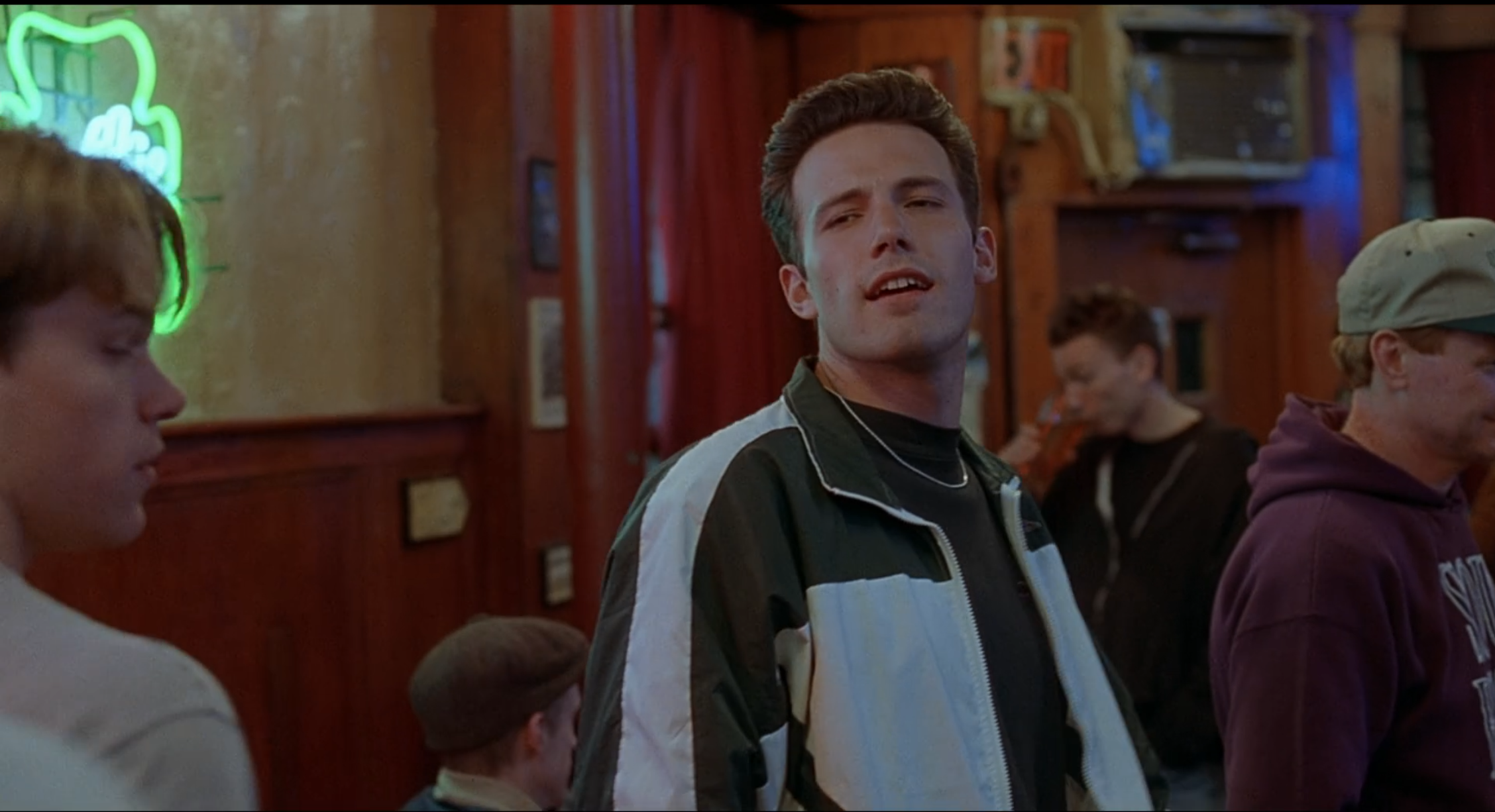
Neon accent
2.Chaotic framing for a chaotic scene—in a subsequent scene, Matt Damon gets into a scrap on a baseball field. Chaos ensues, and the cops come to break it up. Naturally, there’s lots of handheld movement, scrappy close-ups, and quick cuts.
See the image below for a taste of the kinetic framing (with leading lines to draw your attention to the “security“):
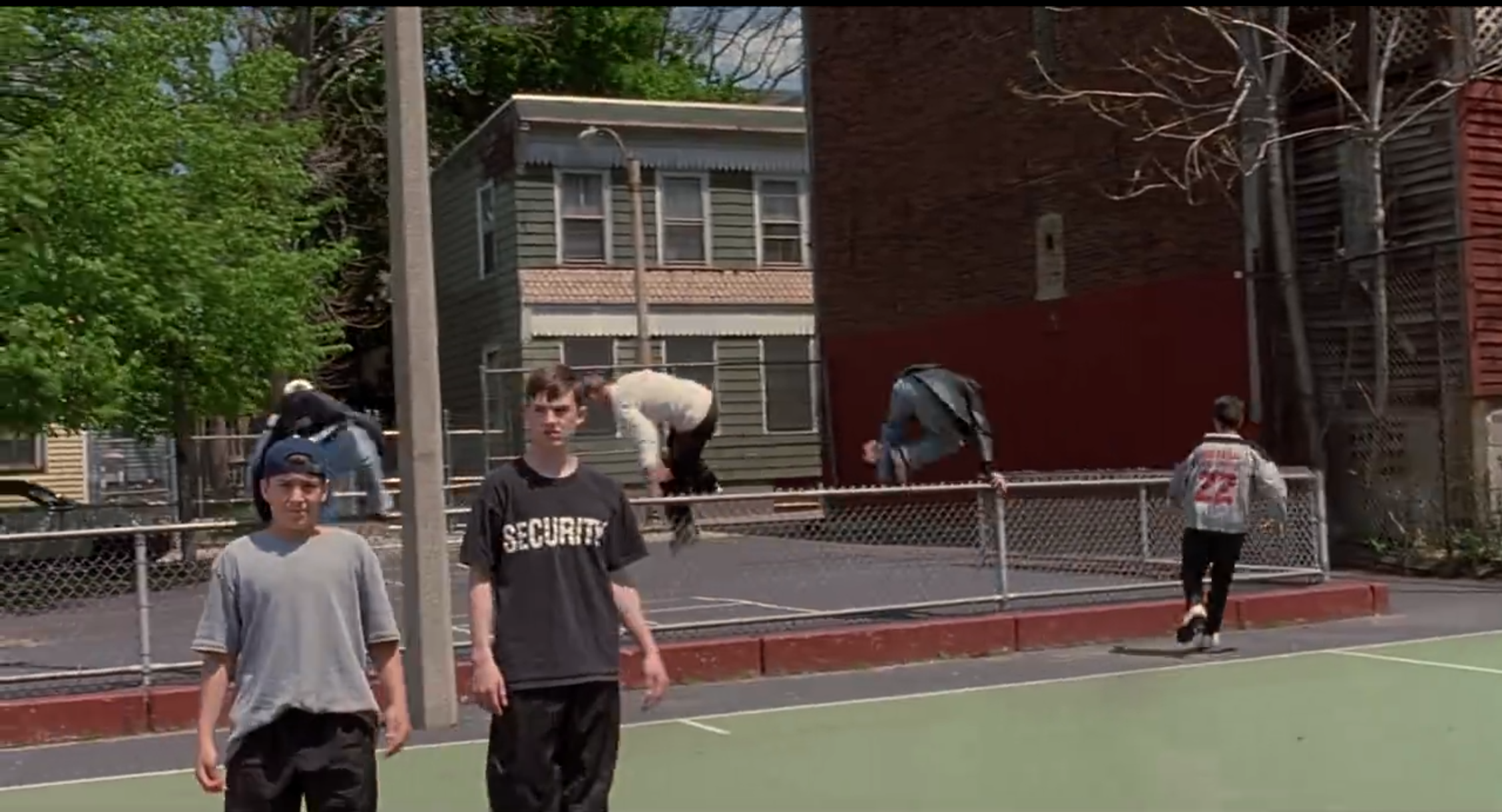
Chaotic framing
3.Eye light—Good Will Hunting utilises eye/catch lighting to highlight the eyes in the frame. This is great for directing the audience’s attention to the character’s face in the shot, and the emotions they’re feeling. It’s also a great way of illuminating the most important place in the frame—the eyes. Even though the rest of the shot is arguably underexposed, the eyes are entirely visible; thus the shot feels impactful and purposeful. See the image below:
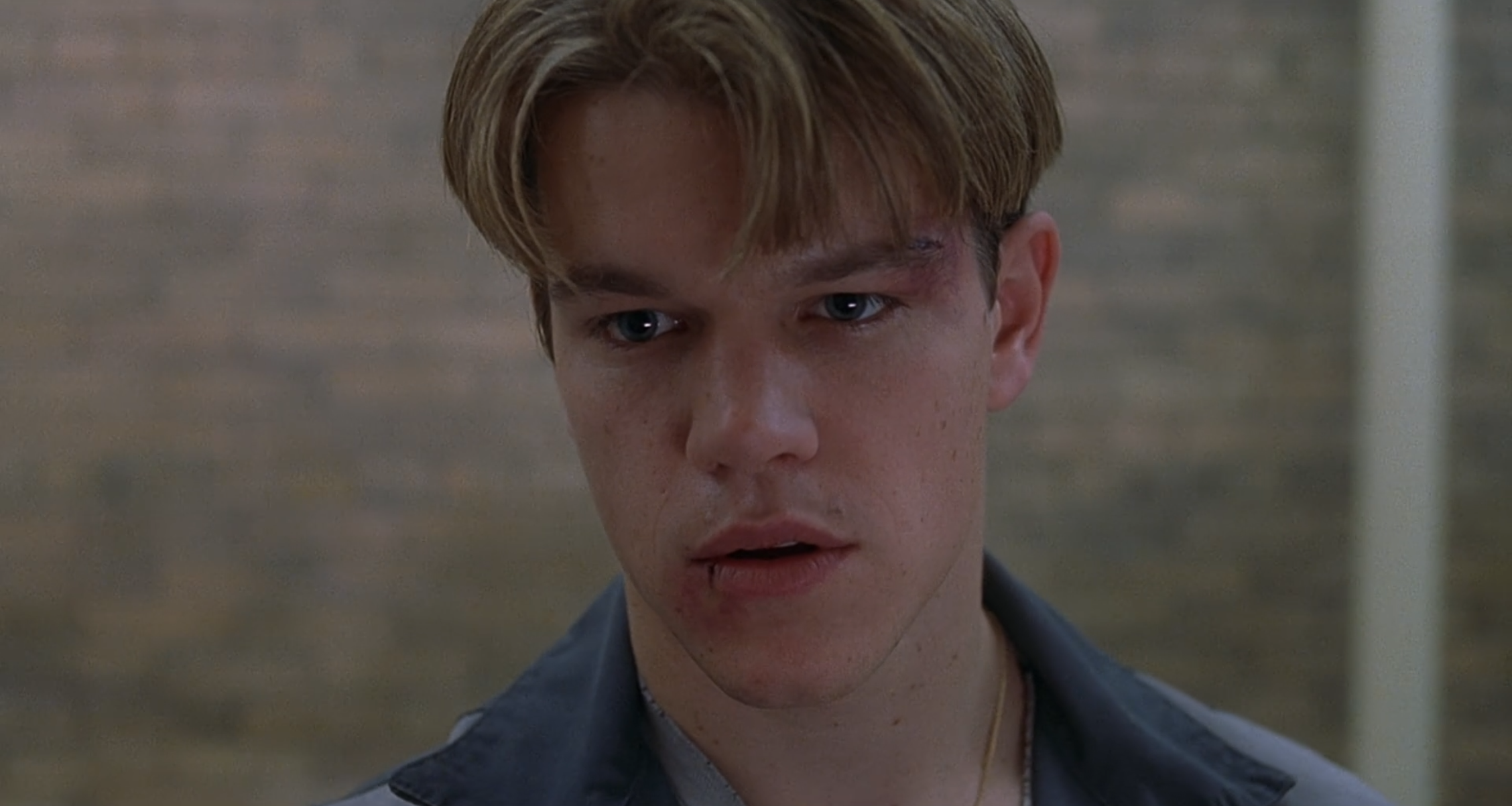
Eye light
4.Hard light for a hard scene—in a courtroom scene, there is a ray of hard light being punched in through the windows onto the wall behind the judge. It’s good for 2 things: looking natural, and telling the audience it’s day time.
Nothing sells day time more than a hard ray of light on the wall behind the characters. See the image below:
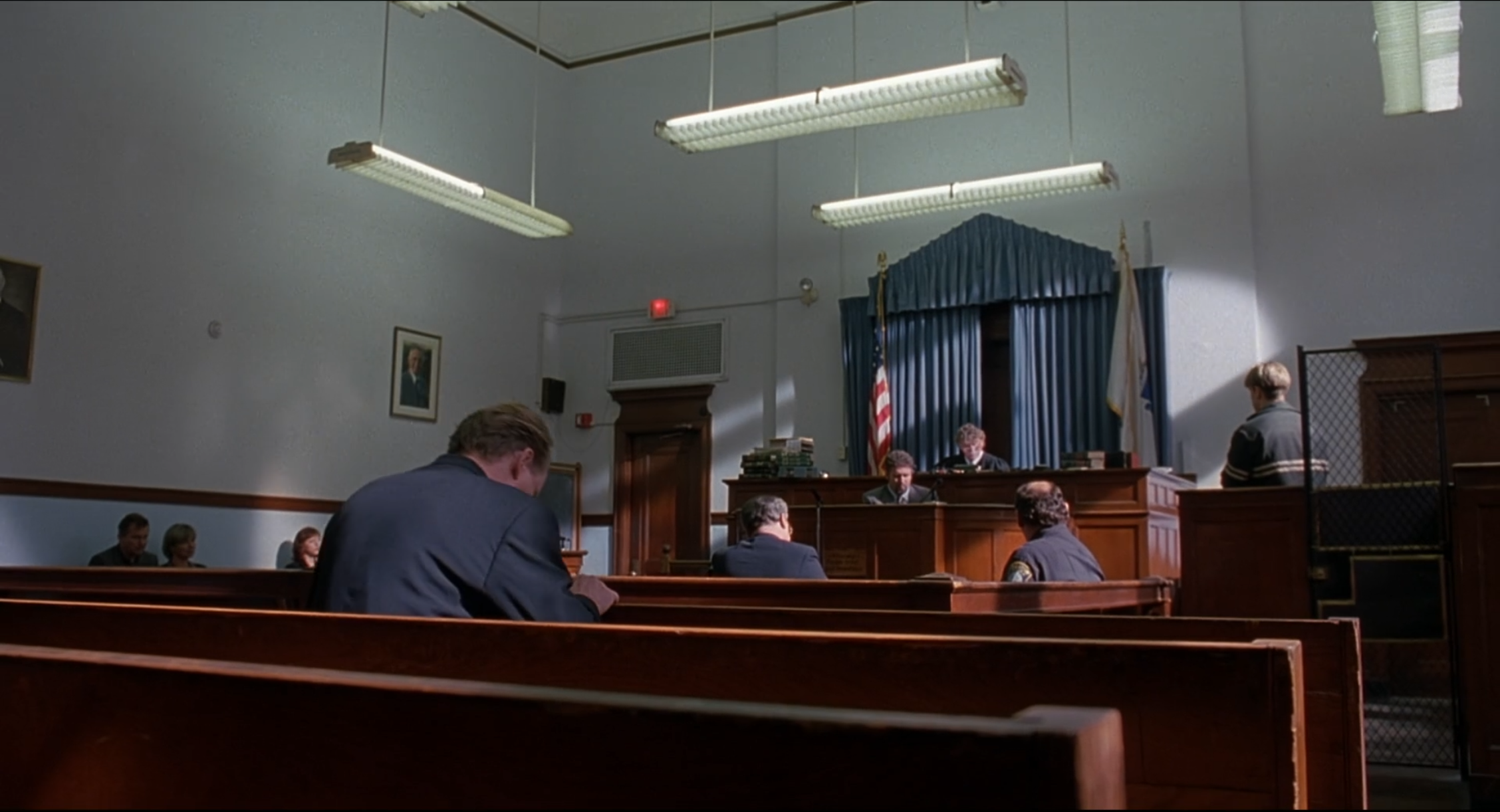
Hard light
5.Golden light as a means of storytelling—the quality of light can be used in connection to the story being told. In an end scene, Matt Damon is riding the train while golden light is coming in from the window. There are also POV shots looking out from the train.
Shooting at golden hour helps sell the sense that the character has grown, and they are finding a new sense of meaning in the story. Good Will Hunting uses this to show that Matt Damon has outgrown his anger, and found a new way of living. See the POV shot below of the view outside the train:
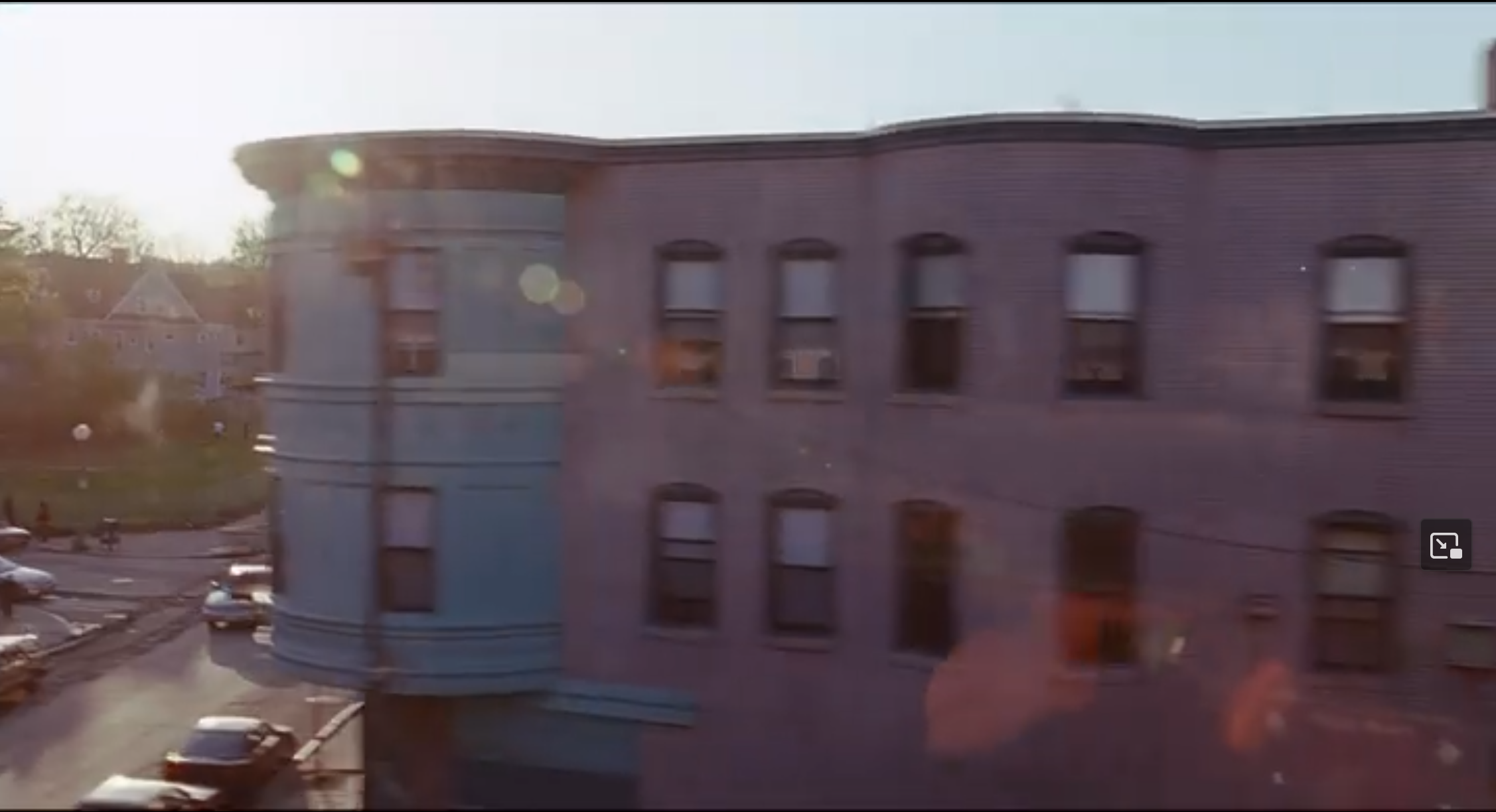
Golden light
That’s all for this post, folks. This film is a true classic, with many visually interesting scenes throughout. The techniques are simple, but effective.
Thanks for reading and if you’ve any comments, let me know down below.
Good luck out there.
-D.C.