Blog #29 Cinematography Analysis - Moneyball (2011)
I watched this film for the first time recently. It’s an eerie film—a slow burner that chips away at your pre-conceived notions, until it sucks you in.
It could be easily renamed The Brad Pitt film because it’s mostly him being macho around other macho men.
It’s a nice looking film. It’s simple and it doesn’t try too hard, like a lot of other films in its genre. It creates a mood and it sticks to it.
The cinematographer was Wally Pfister, who has feaured in other blog posts on this site. I like his work. It has a safe, yet unique style that sucks you into the cinema experience, even if you’re watching at home. I took some notes while watching it and found some clever techniques that I’m going to share.
Here are 5 points:
Wide tripod shots - this film goes wider than most, with a lot of full shots and wider. It lets you look all around the frame and get the context of the setting: What does the coach’s home look like? Are they messy or tidy?
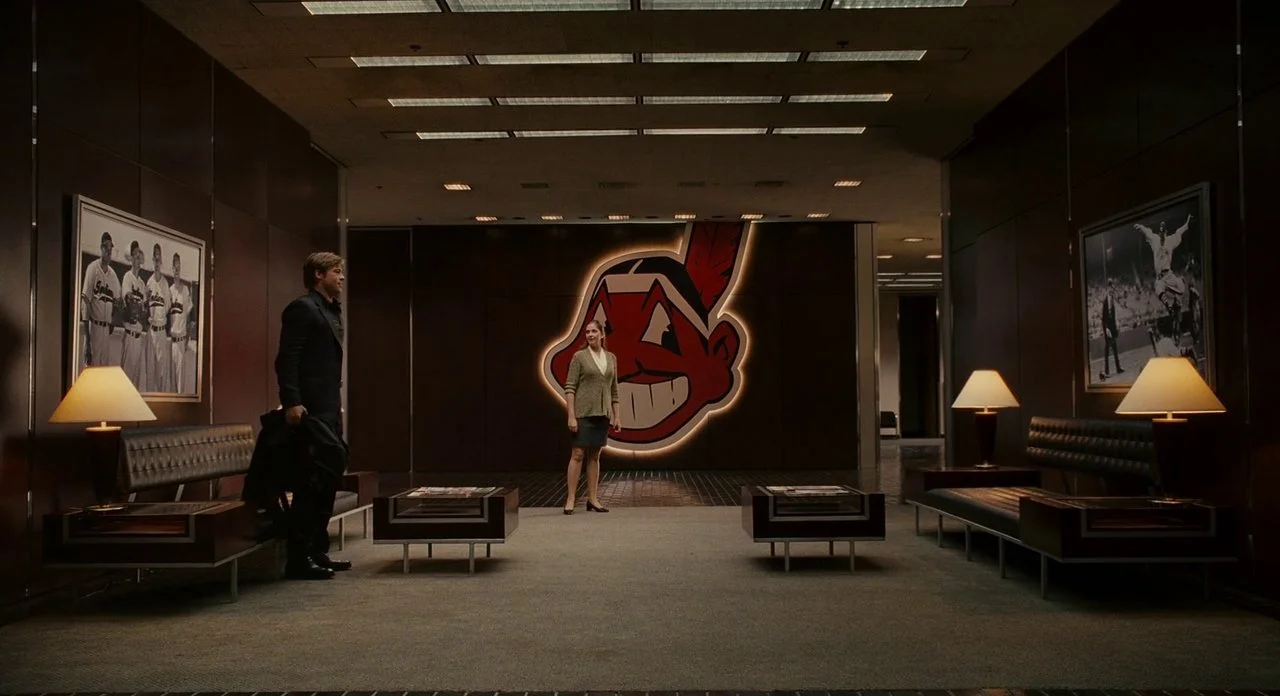
Wide shot
2. Panning - this film does something I haven’t seen in a long time: panning. Other films go crazy on dolly shots: in and out, but this film keeps it simple. It’s worth noting.
3. Flourescent-motivated lighting - many of the scenes are indoors, so the filmmakers decided to work with these lights as motivation for the scene. They used 3-point lighting mostly, keeping it simple again. Even though the overhead lighting was neutral/cold, they often lit warmer, which created a more cinematic tone. Like other Wally Pfister projects, they made the key ultra soft, for a more natural look.
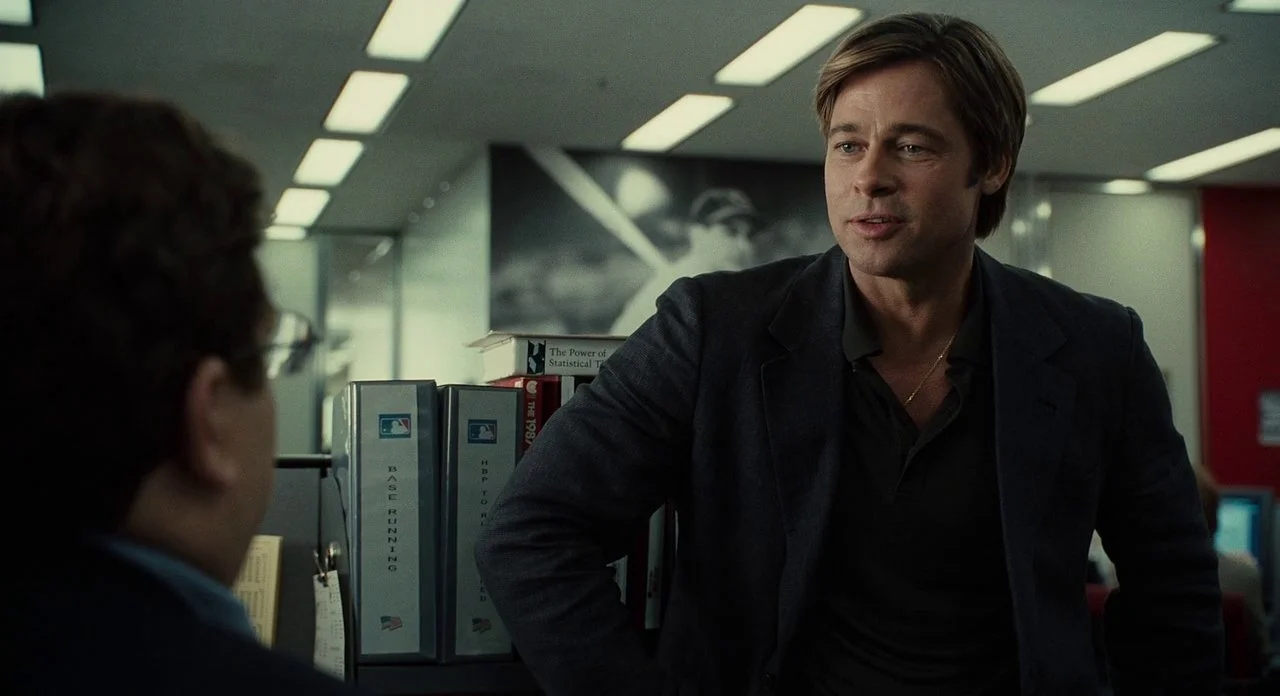
Fluorescent
4. Extreme close ups - the film utilises ECUS’s when showing quick shots of baseball shots. It’s meant to create a tone of information and knowledge. The technique works well, it reminds me of the BBC Sherlock (2010) series. You could never read the information but it goes to show that they used math and information to conclude their picks for the team.
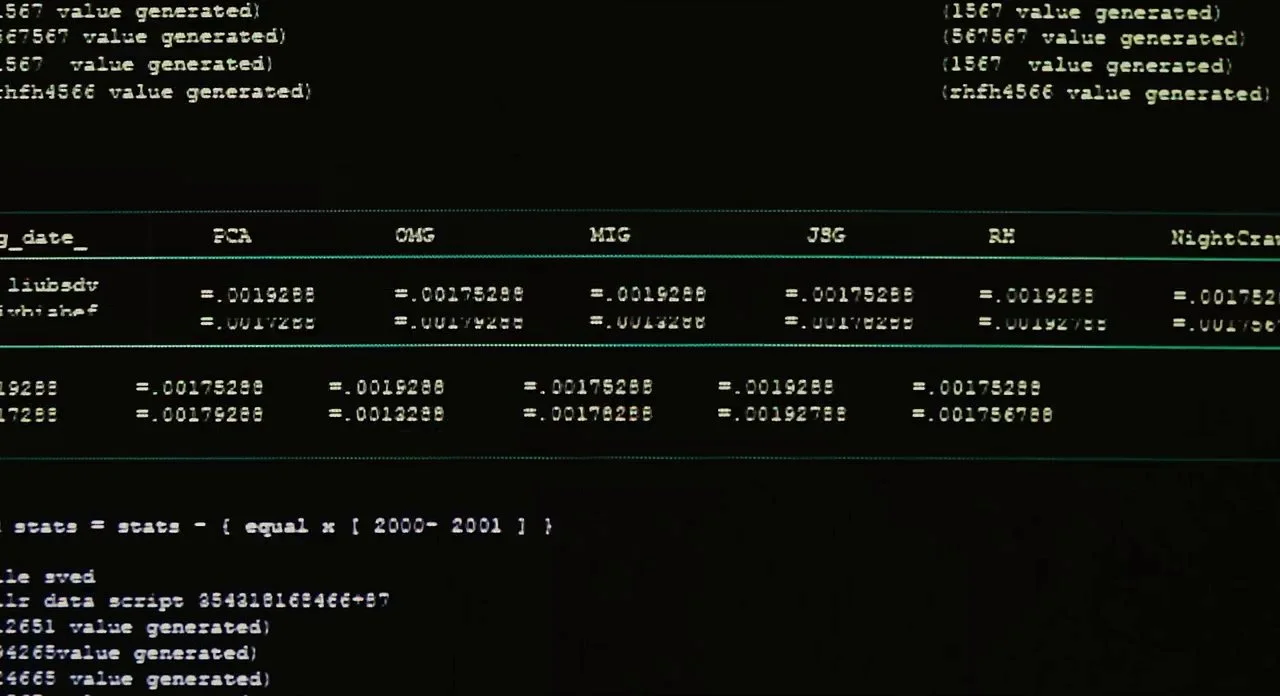
Stats
5. Lastly, they mixed in VHS footage of real events with the footage they shot. They even used real audio from the events, which must have been spine-tingling for real baseball fans to see. The use of this was clever and subtle; it wasn’t always clear to see which was their footage and which was the real footage. It created immersion and showed the magnitude of the history, even if I wasn’t familiar with it.
Those are my thoughts, it’s worth a watch if you haven’t seen it for the performances alone. Jonah Hill was an excellent nervous nerd in it. The film looks very much like a mix of other films from the time; it has a familiarity about it.
Thanks for reading and if you’ve any comments, let me know down below.
Good luck out there.
-D.C.