Blog #38 Bias in A.I. and Search Results—Where is the “World” exactly?
Here’s a fact that people often forget: A.I. is not always correct.
Gasp.
It’s true, sometimes you ask Chat GPT a question, and it gives you an answer you know not to be true.
So you call it out, and it responds: “Yes, you’re actually correct. Nice catch.“
Then you ask again, providing new information, and once more it gives you the wrong answer.
At this point, you feel like you’ve wasted your own time and proceed to find the answer yourself. So you do that—but in the back of your mind—you think: There’s something not quite right here.
That’s how I felt recently. I was doing some research on a possible video topic: The biggest shows you’ve never heard of! In the video, I was going to put together a list of shows—mostly from Asia—that people would not have heard of before. That’s when the problems began…
You see, when you search the Internet for “the world“, it doesn’t search the world. It searches through one country—the U.S.
You read that correctly.
When you search the world, search results come back with results from one country only. How is that not a huge problem?
I don’t think I need to explain U.S.-centrism in this post—I’m sure you’re familiar with the topic. So when I search for the biggest shows in the world, I expect the bloggers from the U.S. to pick only shows that are big in the U.S. These shows could be filmed elsewhere, like South Korea or the U.K., but they always add up audience numbers from the U.S. It’s much easier to do it this way, because different statistical sources use different formats. For example, some statistics are counted in viewer numbers and some are counted in hours watched, adding a layer of complexity. But…that’s still not my problem.
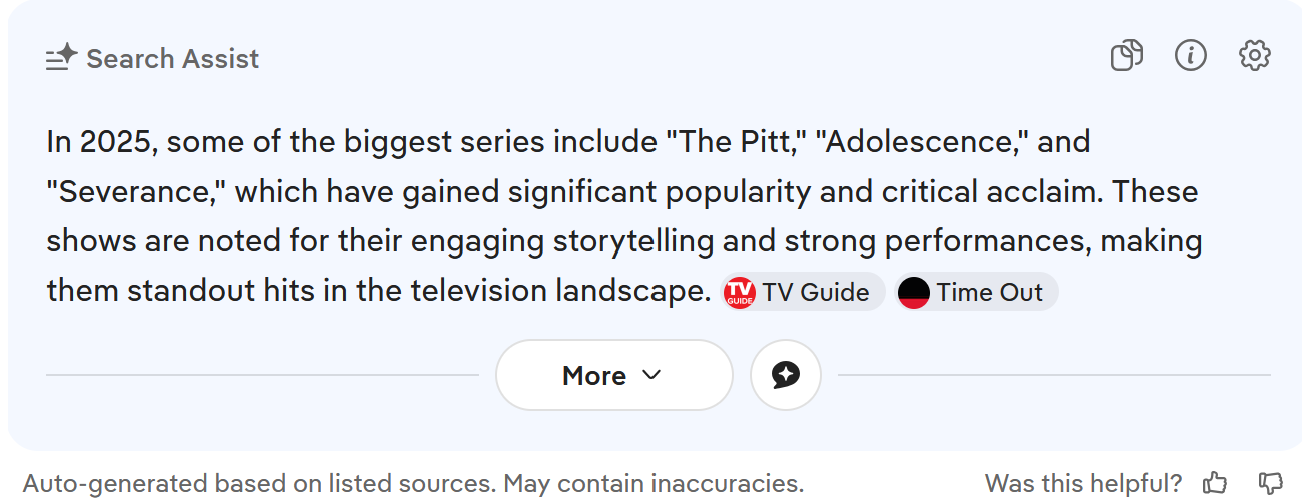
You see, the problem with A.I. results on the top of the search page is that they regurgitate. These algorithms don’t seem to “think” much for themselves, they mostly just agree with the information below them. Which means the data is skewed.
Below is the first answer I was given to the prompt: biggest series in the world 2025,
First answer
Now let’s do some fine tuning.
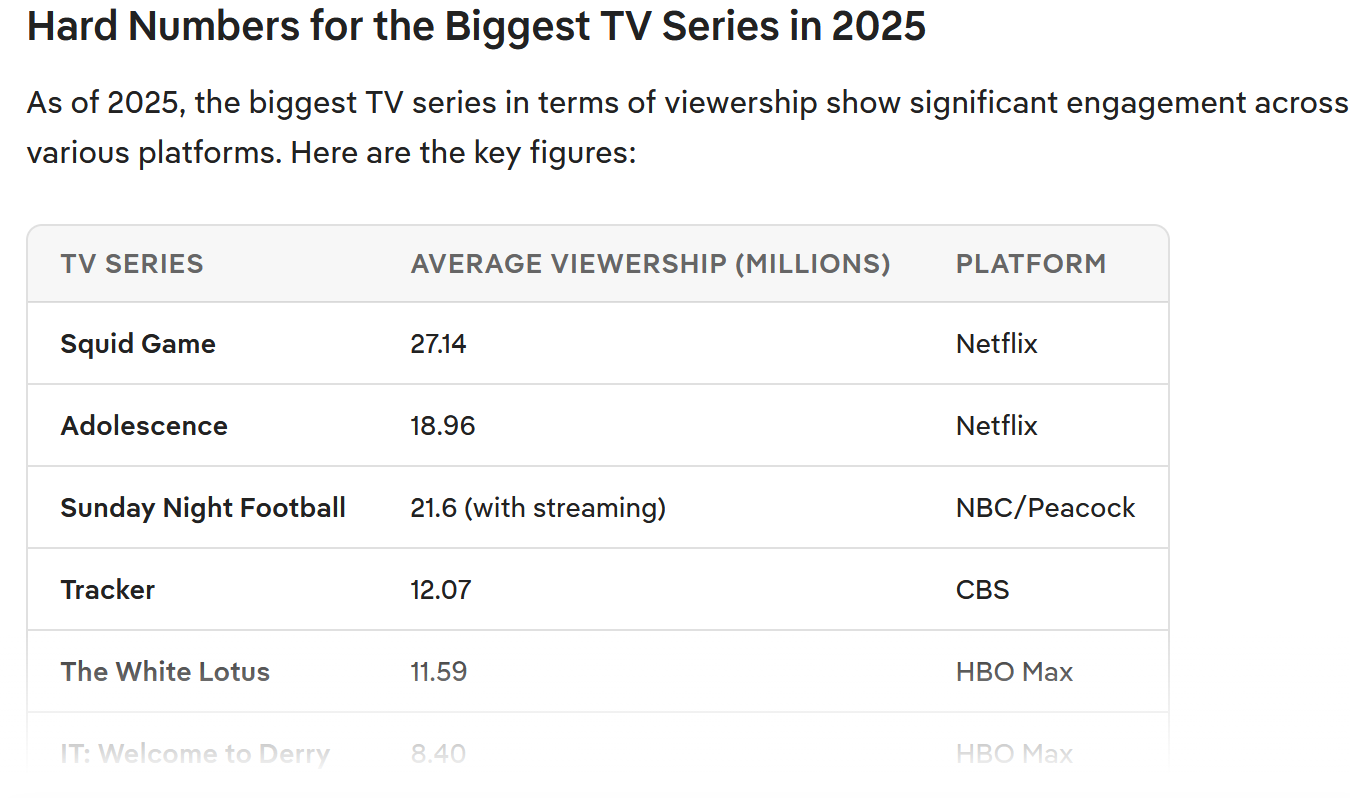
I added hard numbers to get the statistically highest-viewed. Here are the results:
Second answer
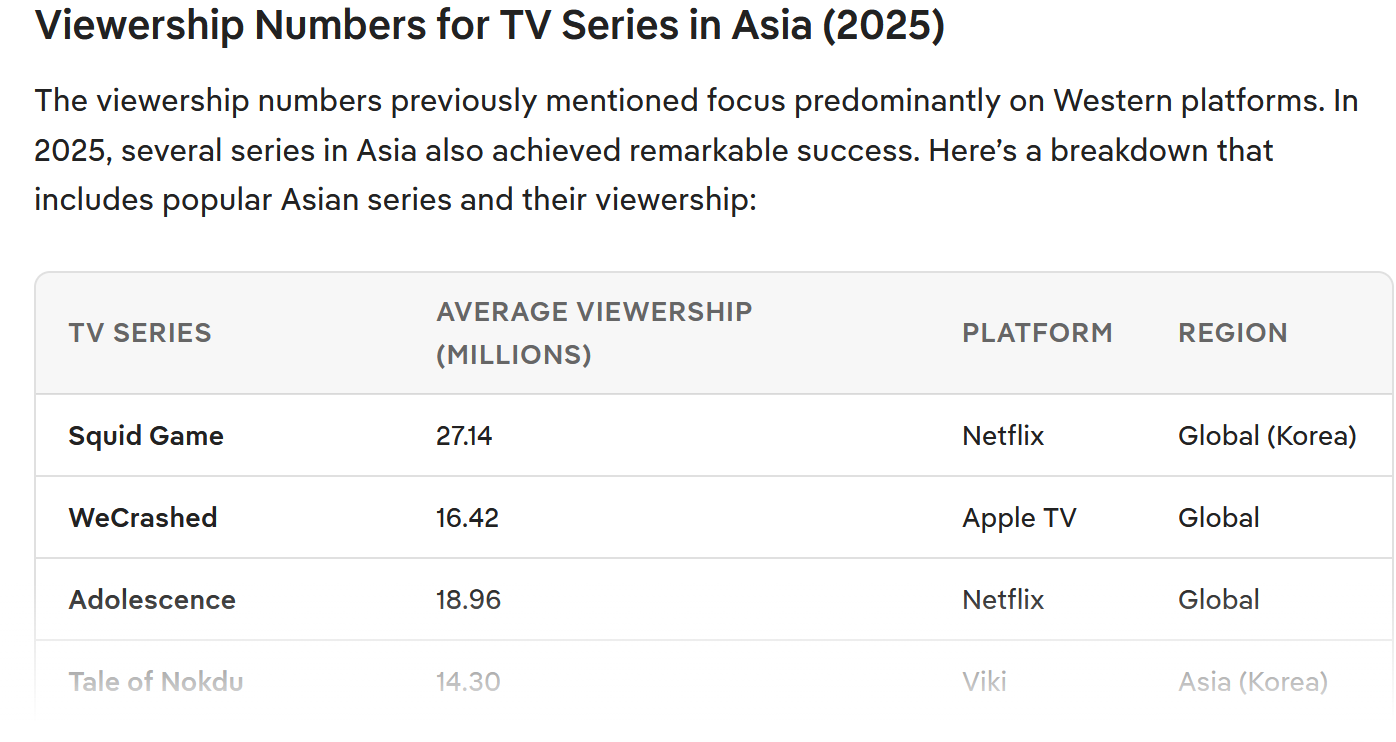
Now let’s blow its mind and see if that information is accurate. My next prompt is: “Does this include Asia?“
Does this include Asia?
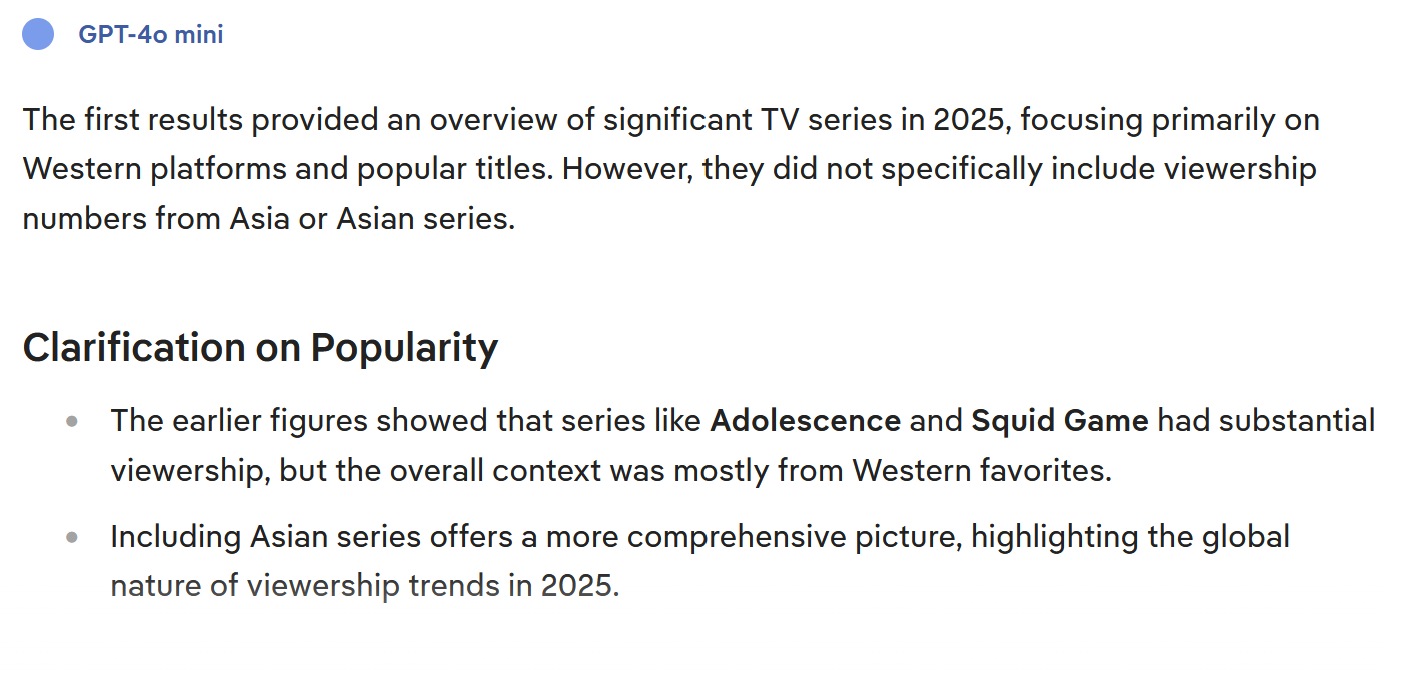
Wow. Now everything has changed. For my final trick, I will ask: “So were the first results true?”
The truth
What’s the lesson here?
That A.I. results aren’t always accurate?
Yes, but also more…
A.I. results are formed by the content it works with. If the internet is U.S.-centric, A.I. will also be.
I could have even gone a step further and asked: does this include China? (It didn’t include popular Chinese shows). That would have made the data even murkier, and created another inconsistency.
Of course, to top it off, sometimes it’s also just statistically wrong—it can get confused by information and wording.
I’ve found that it’s good for one thing: being the world’s best spell-checker.
Those are my thoughts. I find this stuff fascinating. Hope you found something useful in here.
Thanks for reading and if you’ve any comments, let me know down below.
Good luck out there.
-D.C.